


Relationships with Regional NGOs and Government for SDG Policy
SDG 17.2.1
Sunway University’s Leadership in Developing ASEAN STI Ecosystem Foresight 2035 through 10-10 MySTIE
Sunway University contributes at the system level to national and regional SDG policy development through its leadership in science, technology, and innovation (STI) governance. The University’s Pro Vice-Chancellor (Research and Sustainability), Professor Dr. Mahendhiran Sanggaran Nair, serves as Chair of the 10-10 MySTIE Committee and Chair of the ASEAN AHEAD: ASEAN STIE Ecosystem Foresight 2035 & Beyond Study, demonstrating Sunway’s central role in informing government-led sustainable development planning.

The 10-10 MySTIE Framework connects ten socio-economic drivers of change with ten STI enablers to create a comprehensive ecosystem for Malaysia’s sustainable and inclusive growth. The framework identifies key socio-economic drivers such as energy, water, health, and digital economy, and aligns them with STI enablers including advanced materials, smart technologies, and biotechnology. This alignment facilitates strategic prioritization of research and innovation, enabling Malaysia to transition toward a knowledge-based, high-tech economy in line with national aspirations such as the Twelfth Malaysia Plan and the Malaysia MADANI vision.
Building on this, ASEAN AHEAD: ASEAN STIE Ecosystem Foresight 2035 & Beyond Study applied foresight methodologies to model likely futures with and without interventions, identifying regional opportunities and risks in renewable energy, energy storage, and low-carbon mobility. Its findings informed the ASEAN Plan of Action on Science, Technology and Innovation (APASTI) 2026–2035. The plan includes monitoring and reporting mechanisms to evaluate implementation progress and policy impact.
This iterative policy pathway—from 10-10 MySTIE to ASEAN AHEAD: ASEAN STIE Ecosystem Foresight 2035 & Beyond Study to APASTI 2026-2035—illustrates adaptive management, ensuring evidence from national research continuously informs regional policy evolution. These initiatives directly advance SDG 7, SDG 9, SDG 13, and SDG 17, positioning Sunway University as a strategic partner in shaping evidence-based, future-oriented energy policy across Southeast Asia.
Sunway University’s Partnership with Ipoh City Council on the Ipoh Doughnut Economics Programme
Sunway University, through the Sunway Centre for Planetary Health (SCPH), is directly involved in regional SDG policy development through its collaboration with the Ipoh City Council (Majlis Bandaraya Ipoh, MBI) under the Ipoh Doughnut Economics Programme.
Launched in March 2023 with support from Yayasan Hasanah, and implemented with Institut Darul Ridzuan (IDR) and People of Remarkable Talent (PORT), the initiative—endorsed by His Royal Highness Sultan Nazrin Muizzuddin Shah of Perak—positions Ipoh as Malaysia’s first “Doughnut City.” It integrates the Doughnut Economics framework into local planning to align city governance with the UN Sustainable Development Goals (SDG 11, 13, 17).
SCPH provides research and policy input to identify key social and environmental challenges—such as affordable housing, climate resilience, and equitable growth—and facilitates multi-stakeholder workshops and consultations to co-design policy responses. These processes have informed the development of the Ipoh Doughnut Economics: City Portrait in Action 2025–2030, a policy action plan guiding the city’s transition to a low-carbon, inclusive, and sustainable urban model.

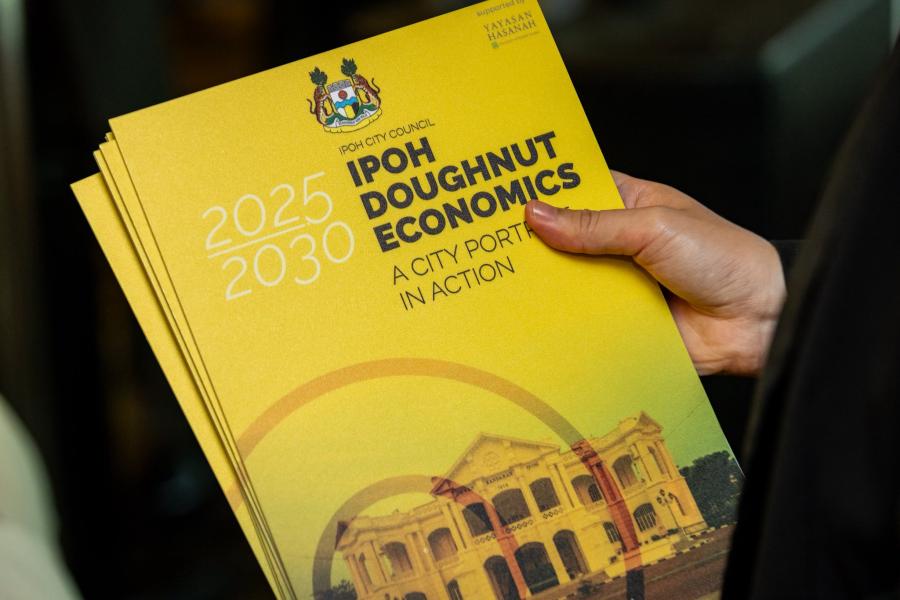
SCPH contributed interdisciplinary methodologies and scenario analyses that modelled likely futures with and without policy interventions, supporting evidence-based planning. The action plan includes monitoring and reporting mechanisms aligned with SDG indicators, enabling annual assessment and review.
Ongoing dialogues, town halls, and feedback cycles ensure that the plan is adaptively managed, evolving in response to new data and community input. This partnership demonstrates Sunway University’s direct and sustained role in SDG-aligned policy formulation, implementation, and review with regional government and civil society partners.
Sunway University’s Contribution to Planetary Health Roadmap and Action Plan

Sunway University, through the Sunway Centre for Planetary Health (SCPH), contributes directly to international SDG policy development as a key partner in the Planetary Health Alliance’s Planetary Health Roadmap and Action Plan. This collaboration, involving leading universities and policy networks worldwide, advances integrated solutions for human and environmental wellbeing in alignment with the UN Sustainable Development Goals (SDGs 3, 4, 13, 15, 16, and 17).
SCPH played a central role in identifying global challenges across critical domains—climate change, biodiversity loss, food system resilience, and public health—through systematic data gathering and measurement. Drawing from interdisciplinary research and stakeholder consultations, the University contributed to developing evidence-based strategies and policy recommendations that align with SDG indicators and targets.
As part of the roadmap’s analytical process, SCPH along with the other higher education institutions supported scenario modelling and trend forecasting to assess likely futures with and without interventions, providing an evidence base for policy coherence and strategic decision-making. The resulting framework offers guidance for governments and institutions to implement, monitor, and report progress on SDG-aligned planetary health outcomes.
This engagement underscores Sunway University’s role as a global knowledge partner and policy contributor, strengthening the international community’s capacity to integrate scientific evidence, data measurement, and governance innovation into the ongoing pursuit of the Sustainable Development Goals.


